


Notes
( COMMUTES · 22 MAY 2026 · 4 MIN )

The commute you see on a map isn’t the one you’ll live.

Twelve kilometres can be twenty minutes or an hour. The difference is the road, not the distance.

( SCROLL ↓ )
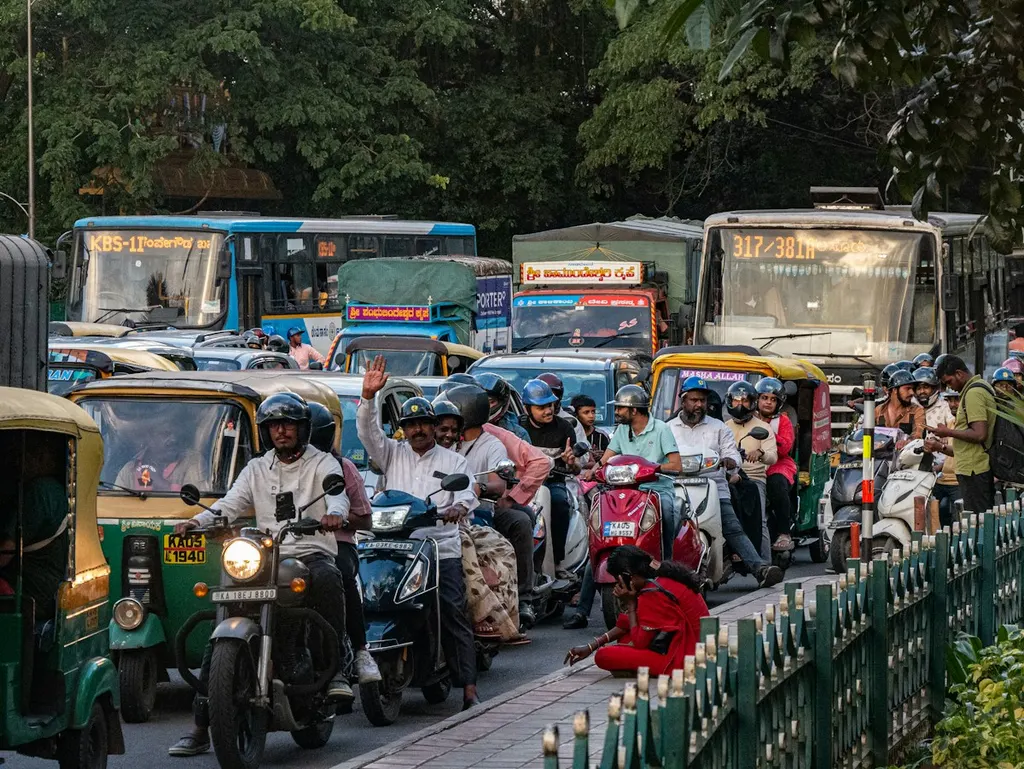
Riders on scooters moving down a street

Twelve kilometres can be twenty minutes or an hour.

The map will tell you the distance. It will not tell you what happens between the two points.

A listing gives you a number because a number is easy to print. You are not going to live in the number.

01

The last kilometre is the slow one

Most of a bad Bengaluru commute is not spread evenly across its length. It is concentrated in the final stretch, and in three or four fixed points that do not move.

A narrow approach road that was laid for a village. A school gate at 8.30. A railway crossing that decides your morning. A junction where three roads become one. A flyover that looks like a shortcut until everyone else has the same idea.

None of these are visible from twelve kilometres away. All of them are visible at the hour they happen.

02

Same distance, different commute

Two homes can sit the same distance from the same office and offer nothing like the same journey.

HOME A HOME B
TO THE OFFICE 12 km 12 km
THE ROUTE One arterial road most of the way Three feeder roads and a level crossing
AT 11AM 24 minutes 26 minutes
AT 9AM 35 minutes About an hour, on a good day
WHEN IT RAINS Slower, and still predictable One flooded underpass from unusable
WHAT YOU CAN PLAN Leaving at a fixed time Leaving early, in case

The listing shows both as twelve kilometres. One of them costs you an hour and a half a day.

You don’t live in kilometres. You live in the journey.

03

What to actually ask

Distance is a single number and it is the least useful thing you can know. These are the questions that replace it:


Which road would I actually take? Where does the traffic begin: at the gate, or six kilometres out? What happens at 9am, not at 11am? What happens at 7pm, coming back? Is the approach to the building easy, or a daily negotiation? Is there a second way out when the first one closes? What does this journey do to a Monday, five days a week, for two years?
WHAT YOU’LL BE TOLD It’s twenty minutes to the office. Almost always measured at a time nobody commutes. It is not a lie, and it is not information.
WHAT TO ASK Twenty minutes at what time of day, on which road? The honest answer names an hour and a route. The evasive one names the distance again.
( BEFORE YOU DECIDE )

Drive it at the wrong hour.

The single most useful thing you can do before signing is make the journey at the time you would actually make it. Not at noon on a Sunday viewing. On a weekday, in the direction you would be travelling.

8.45 ON A TUESDAY The commute you will have, in the direction you will have it.
7.15 THAT EVENING The return leg, which is usually the worse one.
THE FIRST HARD RAIN If you can, once. It tells you which roads are optional.
THEN ASK YOURSELF Would I do this twice a day, five days a week, for two years? If the answer is no, no amount of terrace garden fixes it.

We do not shortlist by distance. We look at which road you would take, where it fails, at what hour, and whether there is another way out when it does.

It is the part of Bengaluru a listing almost never tells you, and the part you feel every single morning.

A home is not a distance. It is a route you repeat.
← NEWER Ten months’ deposit isn’t always ten months’ deposit. ALL NOTES The journal OLDER → What “furnished” actually means here.
( MORE FROM THE JOURNAL )

What else we keep learning.

A SMALL ASK

May we learn from this visit? An anonymised replay helps us understand what works, what doesn’t, and where we can make the experience better.

What each tool does →